Related: Stand Mixer Attachments Worth Buying
I spent twenty years kneading dough by hand and ten of those years running a bakery, and I still remember the day I stopped pretending my wrists were going to hold up. The stand mixer is the greatest thing to happen to bread since the oven, but only if you buy the right one. When people ask me about stand mixers for bread dough, they almost always ask about bowl size first. Bowl size is the least important number on the box. The motor is the mixer.
The test I run on every machine that comes through my kitchen is the same: the same sourdough, the same brioche, and the same question at the end of the fifth loaf, which is whether the motor smells like it has been working or smells like it has been cooking. A mixer that whips cream without breaking a sweat can still stall on two pounds of stiff dough, and no amount of glossy photography changes that.
The four machines below are not four versions of the same thing. One is built for heavy dough and long bakes. One is a value pick with a bowl big enough for a serious batch. One is a small-kitchen workhorse for cookies and frosting. One is the mixer I point cake bakers toward when they ask about precision. Match the machine to the job and you will be happy for a decade.
Best Overall: Kenwood Chef Titanium
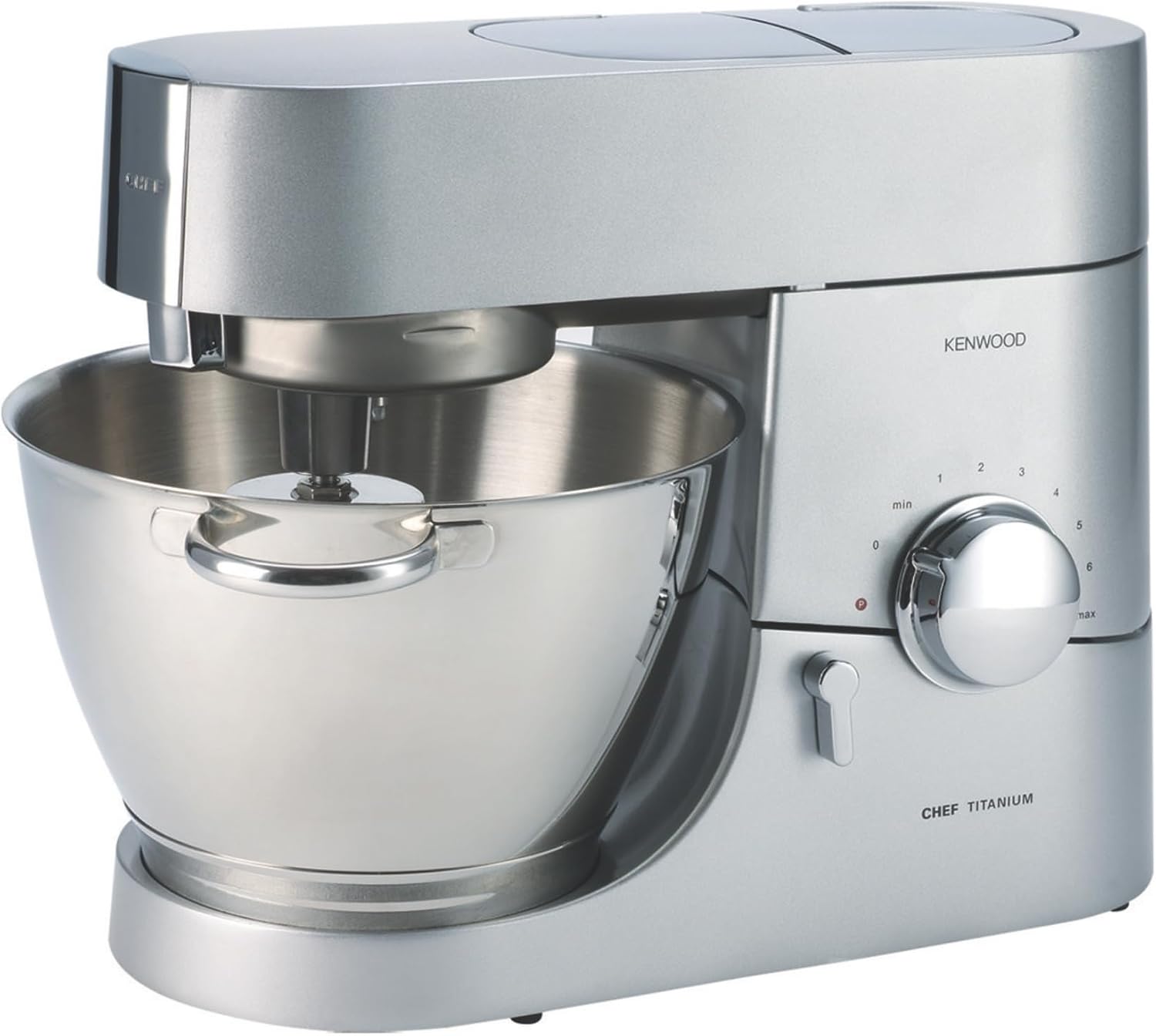
The Kenwood Chef Titanium is the machine I would hand a bread baker first, and the reason is right in the spec sheet: an 800-watt motor with electronic variable speed control, a 5-quart stainless work bowl that is dishwasher safe, and three mixing tools in the box. That is the most power in this group, and power is what keeps a mixer from quitting halfway through a stiff dough.
Variable speed control sounds like a luxury until you are mixing bread. You want to start slow so the flour does not erupt out of the bowl, then move up as the dough comes together and the gluten starts to develop. A smooth electronic dial lets you do that without hunting for a notch. Wattage is not the same thing as torque, and I have said that for years, but 800 watts gives a motor the headroom to keep turning instead of heating up.
The dishwasher-safe work bowl matters more than people admit. If cleanup is annoying, you stop baking. The three included tools cover the three jobs that matter: kneading, creaming, and whipping.
What you give up is money and a little capacity. A 5-quart bowl is one big loaf or two smaller ones, not a double batch of brioche for a crowd. If you bake for a bakery-sized crowd every week, you want a bigger bowl and an even heavier machine.
Best Value: CEBORY 3-in-1 Electric Stand Mixer
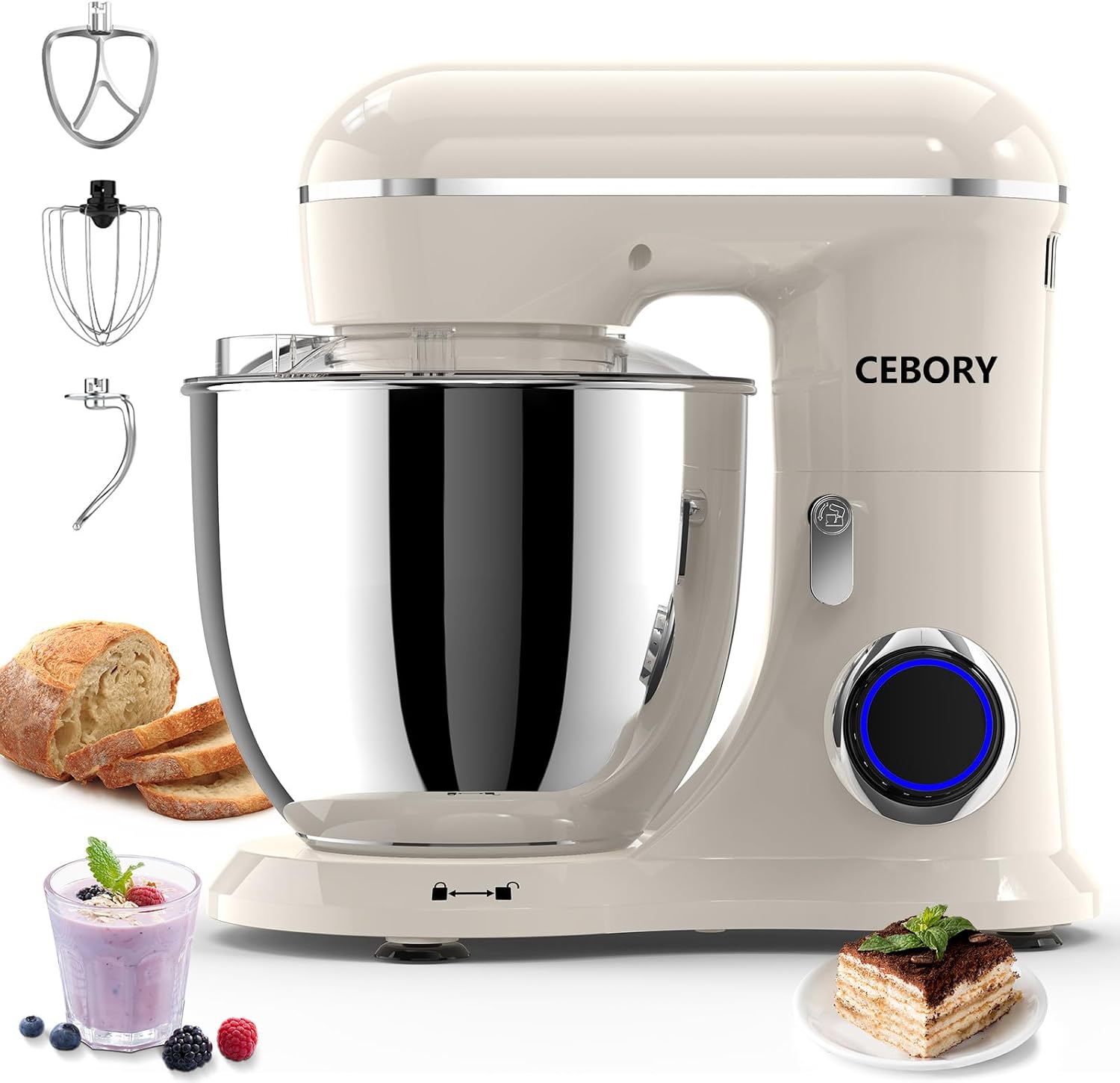
The CEBORY 3-in-1 is the pick for anyone who wants bread-capable power without paying bread-bakery money. It carries a 660-watt motor, a 6.5-quart bowl, and a 10-speed control, and it ships with a dough hook, a beater, and a whisk, which are the three tools that actually get used in a home kitchen.
The 6.5-quart bowl is the largest in this group, and that is both the appeal and the caution. A big bowl is wonderful for a double batch of cookie dough or a tall sponge cake. It is less wonderful if you drop two pounds of stiff dough into it and expect a 660-watt motor to knead with the same authority as a machine built around heavy dough. The bowl size is not a lie here, but the useful dough load is smaller than the bowl suggests. That is true of every mixer at this price, from every brand.
The 10-speed control gives you room between slow incorporation and fast whipping, and the almond cream finish is easier to live with on a counter than a lot of the black-and-steel boxes out there. For a home baker making bread once or twice a week, plus cakes and cookies in between, this is the most mixer per dollar in the group.
Best for Cake and Cookie Bakers: Cuisinart SM-50
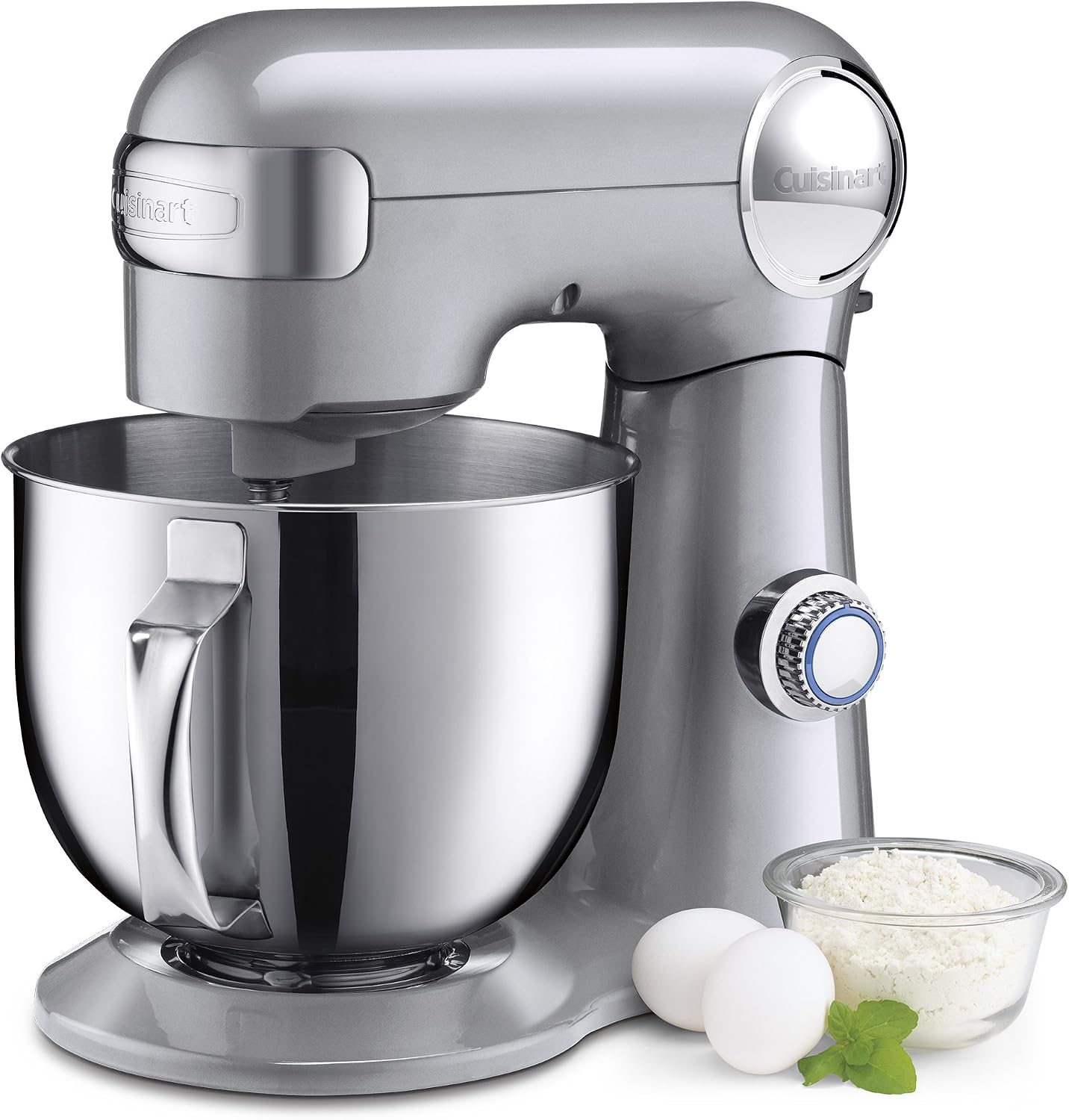
The Cuisinart SM-50 is a 12-speed machine with a 5.5-quart bowl, and the tool set tells you what it was designed to do: a chef's whisk, a flat mixing paddle, a dough hook, and a splash guard with a pour spout. Twelve speeds is the finest control in this group. If you make Swiss meringue, cream butter and sugar for cookies, or whip egg whites to an exact stage, that range is the whole point.
The splash guard with a pour spout is a genuinely useful piece of plastic. You add flour or liquid through the spout instead of stopping the machine and lifting the head every thirty seconds. The flat paddle is the tool for creaming butter, and it is the tool most mixers get wrong.
It will knead bread. The dough hook is there, and the machine is built for more than frosting. But if bread is the main event at your house, I would rather point you at the Kenwood or the CEBORY and let this one do what it is best at, which is cakes, cookies, and anything that needs a delicate hand.
Best Budget: Dash Everyday Stand Mixer
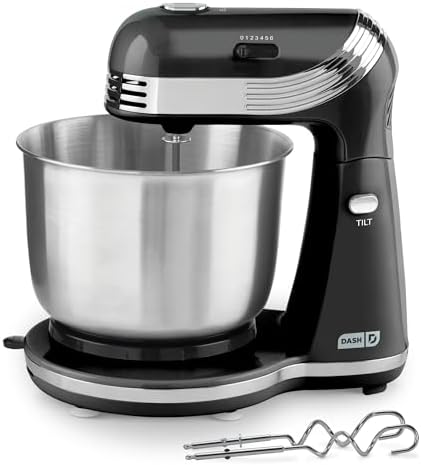
The Dash Everyday is a compact tilt-head machine with a 3-quart stainless steel bowl and six speeds. It is the smallest mixer here, and I want to be straight about what it is: a cake mixer with a dough hook, not a bread machine. That is a description, not an insult. Most people who buy a stand mixer whip cream, make frosting, mix cookie dough, and bake the occasional quick bread, and for those jobs a compact 3-quart machine is easier to store and easier to clean than a heavy 6-quart monster.
Where it struggles is stiff dough. A tilt head lifts up and away from the bowl, which is convenient, but a tilt head under a heavy load has more flex in it than a bowl that raises on arms into the head. Add a 3-quart bowl and a six-speed control and you have a machine that is happiest with a single batch of soft dough, not a two-pound sourdough.
If you are testing whether you will actually use a stand mixer, this is a sensible place to start. If you already know you want to bake bread every week, spend more and buy the motor, not the bowl.
How I judge a stand mixer
Four things decide it for me, and none of them is the number printed largest on the box.
Motor and torque. Wattage tells you how much power a motor draws. Torque tells you whether it can keep turning when the dough fights back. A mixer with a strong motor kneads without slowing down or heating up. A mixer without one stalls, and stalling is how motors die.
Bowl stability under load. Lift bowl designs raise the bowl into the head on arms. Tilt head designs lift the head off the bowl. The tilt is convenient for scraping and adding ingredients. The lift is sturdier when the dough is stiff. If bread is your goal, lift bowl wins.
Dough hook geometry. A good spiral hook climbs the dough and pushes it against the bowl wall. A bad hook buries itself in the middle and spins while the dough sits still. You can feel the difference in thirty seconds.
The attachment ecosystem. A mixer with a real accessory line becomes a pasta roller, a grinder, a shredder. That is what turns a one-job appliance into a kitchen system. A mixer with no accessories is just a mixer.
And then the ten-minute test, which is the one I trust most. Knead stiff dough for ten minutes, then lean over the motor and smell. Warm plastic is normal. Hot and acrid means the motor is working beyond its design, and it will not do that for ten years.
What the specs mean when the dough is stiff
There is a gap between what a mixer advertises and what it does with bread, and the gap is almost always capacity. A 6.5-quart bowl does not mean 6.5 quarts of dough. Stiff dough is dense, and a full bowl of it is a load no home mixer wants. My rule of thumb is to keep dough to about half the bowl and judge the machine by its motor, not its volume.
The same logic applies to speed counts. Ten speeds and twelve speeds are not automatically better than six. What matters is whether the low end is genuinely slow, because that is where bread starts, and whether the machine holds its speed as the dough thickens. A mixer that bogs down at speed two is telling you something about its motor, no matter how many numbers are printed on the dial.
Then there is lift bowl versus tilt head. Tilt head mixers are easier to live with day to day. You tilt the head back, the bowl is right there, you scrape it, you add flour, you snap it down. Lift bowl mixers make you raise the bowl on arms and lock it, which is a two-handed operation and slightly more annoying. Under a heavy dough load, though, the lift design is a fortress and the tilt head is a wobbler. Three of the four machines here use a bowl that locks into place under a fixed head, and that is not an accident. It is the design that survives bread.
Finally, attachments. Every machine here covers kneading, creaming, and whipping with the tools in the box. What separates them over the long haul is whether the brand sells more. A pasta roller or a meat grinder turns a mixer into something you reach for twice a week instead of twice a month.
Stand mixer comparison at a glance
This is the table I keep on a card in the kitchen, sorted by what each machine is built to do. Bowl, speed, and motor figures come from the product listings. Where a brand does not publish a motor rating, I say so rather than guess.
| Mixer | Bowl | Speeds | Motor | Built for | Amazon |
|---|---|---|---|---|---|
 Visit on Amazon → Visit on Amazon →Kenwood Chef Titanium |
5 qt | Electronic variable | 800W | Stiff dough and long bakes | Visit on Amazon → |
 Visit on Amazon → Visit on Amazon →CEBORY 3-in-1 |
6.5 qt | 10 | 660W | Big batches on a budget | Visit on Amazon → |
 Visit on Amazon → Visit on Amazon →Cuisinart SM-50 |
5.5 qt | 12 | Not listed | Cakes, cookies, meringue | Visit on Amazon → |
 Visit on Amazon → Visit on Amazon →Dash Everyday |
3 qt | 6 | Not listed | Small kitchens and small batches | Visit on Amazon → |
Should you buy the Kenwood Chef Titanium?
Yes, if bread is the reason you are shopping. It has the strongest motor here, a 5-quart bowl that locks into a fixed head, dishwasher-safe parts, and variable speed control that makes mixing stiff dough far less of a wrestling match. This is the machine I would expect to still be sitting on a counter ten years from now, still turning the same weekly loaf.
Should you buy the CEBORY 3-in-1?
Yes, if you want bread-capable power and the biggest bowl in the group without paying premium money. Keep dough loads moderate. Treat the 6.5-quart bowl as a generous cake and cookie bowl and a sensible bread bowl, not a bakery vat, and it will handle everything a home baker throws at it.
Should you buy the Cuisinart SM-50?
Yes, if you bake cakes, cookies, and meringues more often than you bake bread. Twelve speeds and a proper flat paddle are worth real money to someone who cares about creaming butter and whipping egg whites to an exact stage. It kneads bread too. It just does not live for it.
Should you buy the Dash Everyday?
Yes, if your kitchen is small, your budget is tight, and your baking leans toward cookies, frosting, and quick breads. It is a compact tilt-head machine with a stainless steel bowl at the lowest price in this group. It is not a bread machine, and you should not ask it to be one.
The last word, and it is the same word I give every baker who asks: buy the motor, not the bowl. Bowls are cheap to make big. Motors are not. A mixer that kneads your weekly loaf without breaking a sweat is worth more than a mixer with two extra quarts of empty space and a motor that smells hot after ten minutes.