KitchenAid vs Bosch: The Mixer Comparison That Matters
The Bosch Universal Plus is advertised as the serious baker's secret, the machine that handles four loaves of bread without breaking a sweat. Is that true? I've owned mine for three years now, after burning out two KitchenAid tilt-heads in four years.
I've also got a decade of weekly bread baking behind me from my Blue Ribbon Bread Co. days, plus a bowl-lift Pro 600 that's still running after ten years.
Here's the honest comparison.
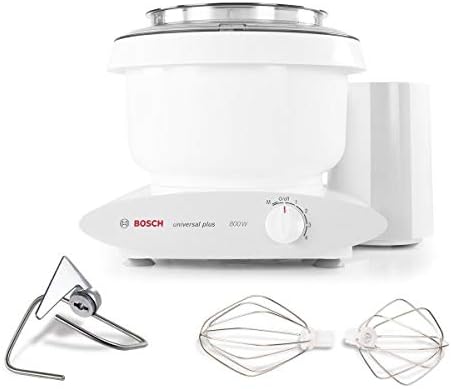
Bosch Universal Plus
Handles double batches of stiff dough without overheating, motor is a beast
Attachments feel plasticky, no tilt-head option, learning curve
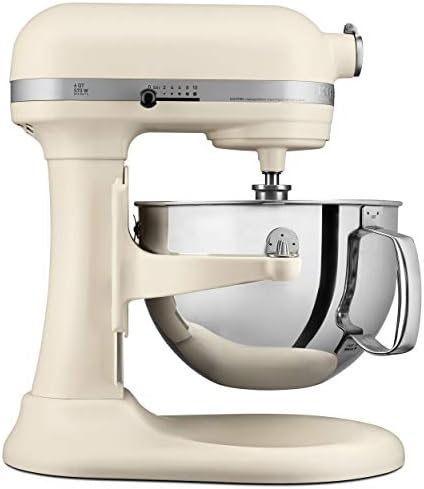
KitchenAid Pro 600
Bowl-lift design is stable, 10-year track record in my kitchen
Newer models have quality control issues, louder than the Bosch
Prices and availability were captured from Amazon Creators API and may change.
KitchenAid Pro 600: The Workhorse With a Worry
Let me start with the problem. The KitchenAid I own, the bowl-lift Pro 600, sounds like a dying lawnmower on speed 6. It's ten years old and has kneaded more dough than most home bakers will touch in a lifetime, but it's loud and it vibrates enough that my 65-pound golden retriever Mabel leaves the kitchen when it's running. She's a good judge of character.
Visit on Amazon →
The bigger issue is what I've seen in the reviews from people who bought new ones. One buyer wrote in March: "My grandma's from 1987 still runs, my new one died in 2 years." That's not a rumor, that's a pattern. The new tilt-head models have plastic gears where metal was promised, and the head wobbles after six months of regular use. At ~$400, in what world is that acceptable?
But the Pro 600 specifically? It's a different animal. The bowl-lift design means the head doesn't wobble, and the motor handles stiff dough better than any tilt-head I've used. I've run it through brioche at low speed for 15 minutes, stiff sourdough double batches at medium speed, and it chugs through all of it. It's not pretty, it's not quiet, but it's a workhorse.
The cost math matters here. A ~$400 mixer that dies at month 13 costs you ~$30 a month. My Pro 600 cost me ~$299 on sale back in 2014. That's ~$2.50 a month for ten years of service. Do the math on that.
Bosch Universal Plus: The Motor That Made Me Laugh
The first time I ran the Bosch through a double batch of bread dough, I actually laughed out loud. I had spent four years babysitting tilt-head mixers, scraping down the bowl, adjusting the speed, watching the dough climb the hook and wrap around the shaft like it was trying to escape. The Bosch just chugged through it. No babysitting. No climbing. No smoke.
Visit on Amazon →
The motor is a beast. It's rated at 800 watts, which is significantly more than the KitchenAid's 590 watts. But wattage is only part of the story. The Bosch uses a direct-drive system that transfers power more efficiently, and it kneads from the bottom of the bowl rather than from a hook that drops in from above. That design difference matters more than any spec sheet number.
Here's what nobody tells you about the Bosch: it's not pretty. The bowl is a wide plastic tub that looks like something from a 1970s science lab. The attachments clip in with a satisfying click, but they're plastic, and they feel less substantial than the metal ones on the KitchenAid. If you care about how your mixer looks on the counter, the Bosch will disappoint you.
The other thing to know is the learning curve. The roller and hook system is completely different from anything else on the market. You don't just drop in a dough hook and walk away. You have to position the roller against the side of the bowl, adjust the height, and learn how the dough moves through the system.
It took me three batches to get it right. The first batch was a sticky mess that I finished by hand at 11 PM.
But once you learn it? I made bagels for the first time in years without having to babysit the machine. It just worked. Four loaves of bread in one batch, no overheating, no wobble, no walking across the counter. I should've bought it years ago.
The Dough Test That Matters
I put both machines through the same gauntlet: a brioche recipe at low speed for 15-plus minutes, a stiff sourdough double batch at medium speed, and a no-load run at speed 6 to check bowl lock security.
The KitchenAid Pro 600 handled the brioche fine, but it got warm. Not burning rubber warm, but warm enough that I noticed. The Bosch stayed cool. The sourdough double batch is where the difference showed. The KitchenAid kneaded it, but I had to scrape down the bowl twice and it sounded strained. The Bosch just chugged through it, no scraping needed, no strain.
The no-load test was interesting. The KitchenAid at speed 6 vibrated enough to walk an inch across my counter over two minutes. The Bosch barely moved. That's a real difference when you're making stiff dough.
Where the Bosch Loses
The attachments are the weak point. The dough hook is plastic, the whisk is plastic, the blender attachment is plastic. I've had the whisk start to discolor after a year of weekly use. It's not broken, but it doesn't look new. The KitchenAid's metal attachments have held up better.
The bowl is also a problem for some people. It's a 6.5-quart plastic tub with handles on the sides. You can't see the dough as well as you can with the KitchenAid's metal bowl, and the plastic scratches over time. I've had mine for three years and it's got a few scratches, but nothing that affects performance.
And the price. The Bosch runs ~$399 to ~$499 depending on the bundle. That's more than the KitchenAid Pro 600, which you can often find for ~$299 on sale. For the price difference, you're paying for a motor that won't burn out and a design that doesn't require babysitting. If you bake bread weekly, that's worth it. If you make cookies once a month, it's not.
Which One Should You Buy?
Choose the KitchenAid Pro 600 if you want a familiar design, metal attachments, and you're willing to accept some noise and vibration. It's a proven workhorse that will last a decade if you treat it right. Just don't buy the tilt-head version and expect it to handle bread. That's a cookie and cake machine, and the dough climbing the hook will drive you insane.
Choose the Bosch Universal Plus if bread is your priority and you're willing to learn a new system. The motor is a beast, it doesn't overheat, it doesn't walk across the counter, and it handles double batches of stiff dough without complaining. The plastic attachments and the learning curve are the price you pay for that performance.
I own both. The KitchenAid has been with me for ten years and it's still running. The Bosch has been with me for three years and it's become my go-to for bread. If I had to pick one, it would be the Bosch, but only because bread is what I bake most. If I was a cookie and cake baker, the KitchenAid would be plenty.
The Honest Bottom Line
I burned out two tilt-head KitchenAids in four years before I learned my lesson. The bowl-lift Pro 600 is a better machine, but the Bosch is a better bread machine. If you bake bread more than once a week, save up for the Bosch.
If you're a casual baker, the Pro 600 will do everything you need and last a decade. Just don't buy a tilt-head and expect it to handle bagel dough.
That's a mistake I won't make again.