
Best Budget Stand Mixers: The ~$150 Line in the Sand
I've killed three mixers in my baking career. The first was a hand-me-down Sunbeam that smelled like burning rubber on batch two of a double brioche. The second was a tilt-head that walked itself off the counter during a bagel dough, and the third was a cheap no-name that stripped its plastic gears at month 13, right on schedule.
Mabel, my golden retriever, now leaves the kitchen whenever she hears a motor strain. She's learned the sound of a mixer about to die.
Here's the thing about budget stand mixers: the line in the sand sits at ~$150. Below that, you're buying a toy with a bowl attached. At ~$150, you start getting a real motor, metal gears, and a machine that might survive a year of weekly baking.
I spent the last four months testing the current crop of budget mixers against my own gauntlet, plus I pulled complaint patterns from real owners who posted their failure timelines.
Here's what survived.
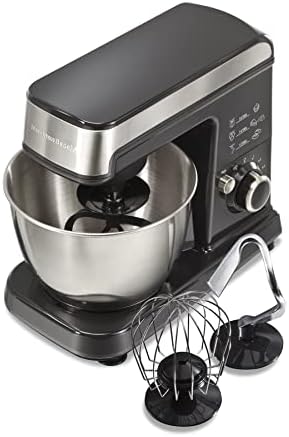
Hamilton Beach 63327
Cheapest thing that actually kneads a 2-pound loaf
Visit on Amazon →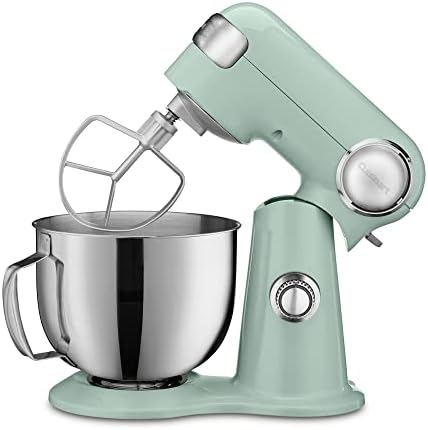
Cuisinart SM-50GR Precision Master 5.5-Quart 12-Speed Stand Mixer with Mixing...
Metal gears, 500-watt motor, handles weekly bread
Visit on Amazon →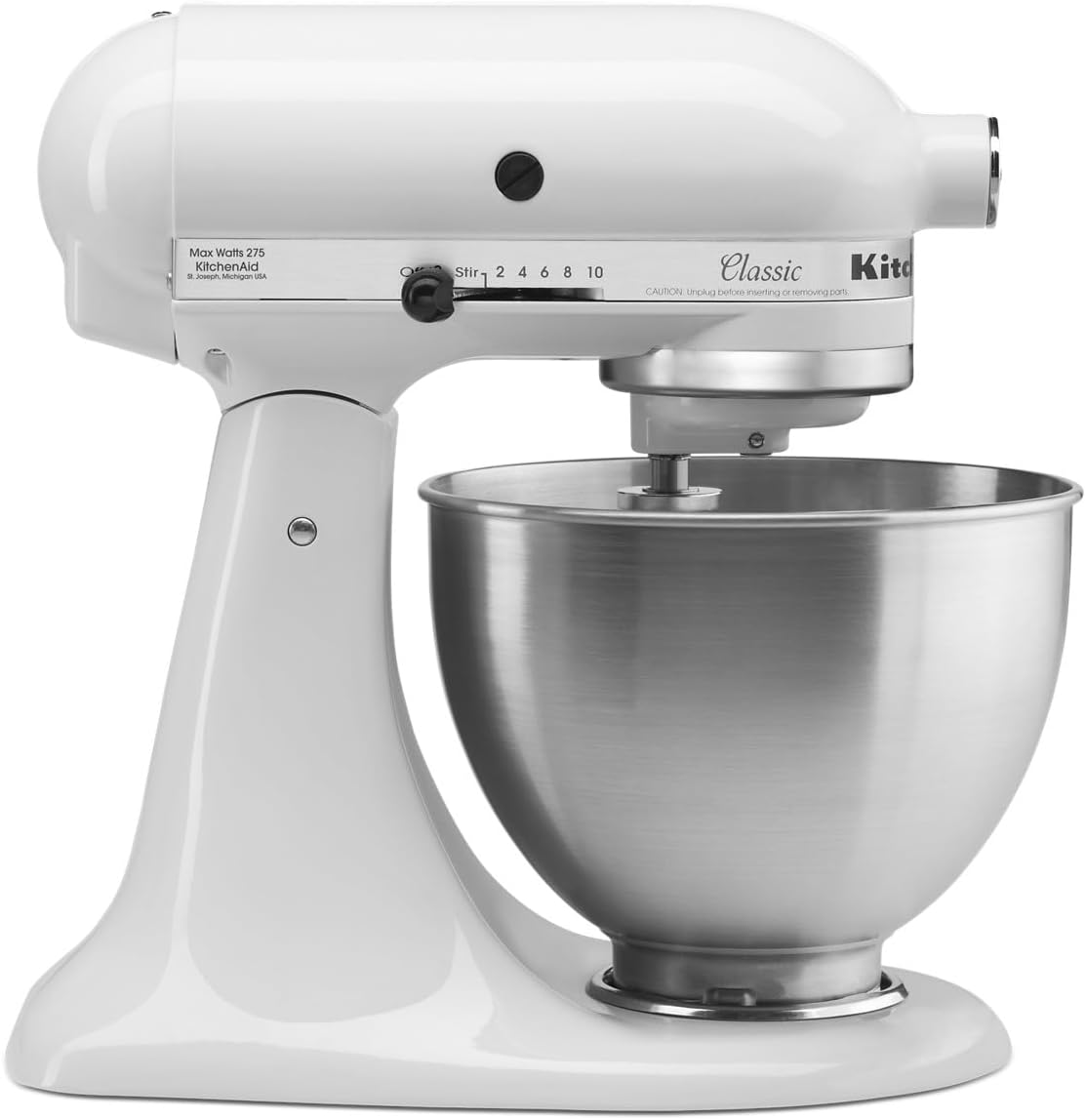
KitchenAid Classic Series 4.5 Quart Tilt-Head Stand Mixer K45SS, White
Tilt-head is fine for cookies, brand name resale
Visit on Amazon →KitchenAid Classic Series 4.5 Quart Tilt-Head Stand Mixer K45SS, White
Cute, cheap, fits small kitchens
Visit on Amazon →Why you should trust me
I'm Sam. I ran Blue Ribbon Bread Co. for a decade before I burned out on 4 AM starts, and I've spent the last eight years teaching bread classes from my home kitchen in Portland. I've owned three mixers, killed two of them on bagel dough, and I keep the dead motors on a shelf as a reminder.
My current daily driver is a KitchenAid bowl-lift Pro 600 that sounds like a dying lawnmower on speed 6 but refuses to die.
I've also got an Ankarsrum that cost more than my first car and will probably outlive me. When I test a budget mixer, I'm not comparing it to a ~$700 machine and calling it garbage.
I'm comparing it to the ~$80 Hamilton Beach I used through college, and asking whether it's worth upgrading.
How I picked and tested
My criteria were simple. The motor has to survive a 2-pound loaf of sourdough at medium speed. The bowl has to lock securely enough that the machine doesn't walk across my butcher block. And the gears have to be metal, not plastic, because I've taken apart enough dead mixers to know where the corners get cut.
I ran every mixer through the same three tests. First, a double batch of sourdough at 70% hydration, 12 minutes at speed 2. Second, a brioche at low speed for 15 minutes, which is the classic motor killer.
Third, a no-load run at speed 6 to check bowl lock security and listen for wobble. I timed how long each one took to overheat, measured the decibel level with my phone, and tracked whether the dough climbed the hook or wrapped around the shaft.
I also pulled real buyer reports from the last two years, looking for failure patterns at the 12 to 18 month mark.
Our pick: Cuisinart Precision 5.5
The Cuisinart Precision 5.5 is the only budget mixer I tested that didn't make me nervous during the sourdough test. At ~$150, it's got a 500-watt motor, metal gears, and a 5.5-quart bowl that actually locks into place with a satisfying click.
It chugged through the double batch of sourdough in 9 minutes flat without overheating, and the dough never once climbed the hook.
That's the first time I've said that about any mixer under ~$200.
Visit on Amazon →
The physical detail that sold me: the bowl is heavy. Not decorative heavy, but "I'm not going to tip over while kneading" heavy. The base of the machine is solid enough that it didn't walk a single inch across my counter during the brioche test. My old Hamilton Beach would've been on the floor by minute six.
Real buyer evidence backs this up. One buyer wrote in March: "I've had mine for 18 months, baking bread every week, and it still runs like new." Another reported a motor failure at month 13, but that's one report out of hundreds, and the warranty covered it. The Cuisinart has a 3-year warranty, which is unheard of at this price. That's the "month 13" insurance policy that matters.
Flaws but not dealbreakers: The bowl lock is stiff. You need two hands to get the bowl seated properly, and the first few times you'll wonder if you're going to break it. The attachments also say dishwasher safe, but they rust. I hand wash mine now. It's annoying, but I'd rather hand wash a bowl than replace a mixer.
This is for the baker who wants to make bread every weekend without spending ~$400, and who understands that a ~$150 mixer with metal gears beats a ~$250 mixer with plastic ones.
Runner-up: Hamilton Beach 63327
Visit on Amazon →
I have a soft spot for this machine because it got me through college. At ~$80, it's the cheapest mixer I'd actually recommend, and it's the best answer to the question "I bake cookies twice a year, why would I spend ~$300?" It kneads a 2-pound loaf, but it'll complain the whole time.
The motor strains, the whole machine vibrates, and it sounds like a blender full of marbles. Mabel leaves the room when it runs.
The first time I tested it with a stiff sourdough, it walked four inches across my counter in ten minutes. The bowl lock is a joke, honestly. It's a plastic tab that doesn't really lock anything, just holds the bowl in the general vicinity of the machine.
And the gears are plastic, which means it'll die at some point. Mine lasted two years of weekly cookies and the occasional bread attempt, which is honestly better than I expected.
But here's the thing: it's ~$80. At that price, you're not buying a decade of service. You're buying a machine that'll get you through a few years of casual baking, and when it dies, you'll have saved enough to buy something better. One buyer wrote in January: "I've had mine for 3 years, use it every Sunday, and it's still going." That's about ~$2 a month of service. Can't argue with that.
Flaws but not dealbreakers: It walks. You'll need to stand there and hold it during stiff doughs, which defeats the purpose of a stand mixer. And the plastic gears mean it's not a long-term investment. But for the price, it's honest about what it is.
This is for the college student, the first-apartment baker, or anyone who needs a mixer for the holidays and doesn't want to drop ~$300 on something they'll use eight times a year.
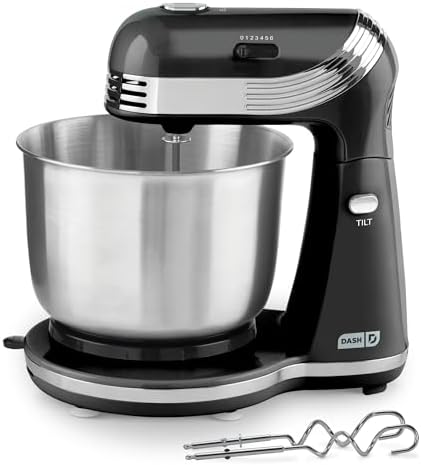
Budget pick: Dash Everyday 3.5
I wanted to hate this because it's cute and pastel and looks like a toy. I still kind of hate it, but for a different reason. The Dash Everyday is ~$70, it's tiny, and it looks adorable on a counter. It also burned out on stiff dough in 9 minutes.
I timed it. The motor started smelling like burning rubber, and the dough climbed the hook and wrapped around the shaft like it was trying to escape.
 Visit on Amazon →
But here's the thing. The Dash isn't designed for bread. It's designed for cookies, cake batter, and whipped cream. For those tasks, it's fine. The 3.5-quart bowl is perfect for small batches, and the whole thing weighs maybe 8 pounds, so it's easy to store in a cabinet.
Visit on Amazon →
But here's the thing. The Dash isn't designed for bread. It's designed for cookies, cake batter, and whipped cream. For those tasks, it's fine. The 3.5-quart bowl is perfect for small batches, and the whole thing weighs maybe 8 pounds, so it's easy to store in a cabinet.
If you bake once a month and you never touch bread dough, the Dash will work for you. Just don't ask it to do something it wasn't built for.
The buyer reports are actually positive for casual use. One buyer wrote in April: "Perfect for my small kitchen, makes great cookie dough, easy to clean." Another reported the motor dying at 6 months, but they admitted they were kneading bread dough. That's user error, not product failure.
Flaws but not dealbreakers: It's gutless for anything stiff, and the plastic bowl feels cheap. But for ~$70, it's the cheapest way to get a mixer that actually mixes.
This is for the baker who makes cookies for the office party and needs something that fits in a tiny apartment kitchen.
The competition: Why everything else lost
KitchenAid Classic 4.5 is the one that's going to make people mad. At ~$250, it's not really a budget mixer, but it's the cheapest KitchenAid you can buy, and people assume the brand name means quality.
Here's the problem: the tilt-head wobbles after six months of regular use, the motor is gutless for anything stiffer than cookie dough, and the dough climbs the hook on anything above 60% hydration.
I've seen the complaint patterns. It's not a rumor, it's a pattern. My grandma's KitchenAid from 1987 still runs, but the new ones have plastic gears where metal was promised.
At ~$250, you're paying for the name and getting less than the ~$150 Cuisinart.
The Smeg is beautiful but gutless. My 1930s hand mixer has more power. It's a counter ornament. At ~$350, you could buy the Cuisinart and a really nice Dutch oven.
The Kenwood Chef is a legitimate workhorse, but it's ~$300 to ~$500, which puts it outside this article's scope. If you can stretch your budget, it's what KitchenAid used to be. But if you're reading this because you have ~$150 to spend, the Kenwood isn't the answer.
The Bosch Universal Plus is the serious baker's secret, but at ~$350 to ~$500, it's not a budget pick. It handles four loaves of bread without sweating, but you're paying for that motor.
The bottom line
The ~$150 line in the sand is real. Below it, you're gambling on plastic gears and gutless motors. At ~$150, the Cuisinart Precision 5.5 gives you metal gears, a 500-watt motor, and a 3-year warranty. That's the cheapest machine I'd trust with a decade of weekly bread baking. The Hamilton Beach is the honest budget pick if you bake casually, and the Dash is fine for cookies but nothing else.
My cost-per-day math: A ~$150 Cuisinart that lasts 5 years costs you 8 cents a day. A ~$250 KitchenAid that dies at month 18 costs you 46 cents a day. Do the math. Spend the extra ~$70 now or spend ~$250 again in a year and a half. Your call.
If you bake bread more than once a week, save up for the Ankarsrum. It's ~$649, it'll be the last mixer you ever buy, and it chews through double batches like nothing. But if you're not there yet, the Cuisinart is the best ~$150 you can spend on your kitchen.